Online Writing Lab
Your collection of resources, guides, and interactive tools on academic writing

Our categories



Writing tips

- Trouble with time management? Plan backwards – from the deadline back to today. Make a list of all upcoming tasks, arrange them chronologically, and break them into smaller steps. Record milestones in a calendar – and celebrate when you reach them!
- Is your argumentation clear? Read your text from back to front and write down one key statement per paragraph in a separate document. If you list the statements from bottom to top, you’ll get a summary of your text in the right order. This way you can check whether all parts are logically arranged.
- Having trouble getting started? Try this: Write first thing in the morning – better 15 minutes than not at all. Begin with a light task, such as typing in the corrections from your last session. Or start with the task you noted at the end of the previous session for the next one.
- Set yourself clear goals and increase your commitment by making them public: You can post your goals on Instagram or stick milestones to the fridge door in your shared flat. Some people use apps, others make bets with fellow writers: Whoever doesn’t reach their goal buys ice cream for the others.
- Sort your ideas by talking with others about your texts. Talk only about the process – “How’s it going?” – and the content. Write an email to a friend explaining a difficult passage. You don’t need to send the email.
- Get feedback on your text. Join a writing consultation or start a writing group. The writing center will help you with this.
- When reading, focus only on style – for a change. What phrases do others in your field use? Make a list of vocabulary or common phrases. What function does a sentence serve? Think not only about what it says, but also what it does – for example, introducing a topic or comparing your own findings with the literature.
- Use further resources. The writing center offers peer consultation and workshops, and in the OWL you’ll find Owly – the digital writing consultation. The library provides guidebooks and a research consultation. Maybe your faculty offers tutorials on writing tasks? The Language Center offers a German consultation – also for people whose first language is not German.
- Avoid accidental plagiarism by paraphrasing in your own words when taking notes. Always mark direct quotes in your notes with quotation marks.
- Breathe. This text will also be finished one day.
- Put it on paper. Take a chance. It may be bad, but it’s the only way to create something good. – William Faulkner
- If there’s a book you want to read, but it hasn’t been written yet, then you must write it yourself. – Toni Morrison
- The scariest moment is always just before you start. – Stephen King
- I try to leave out the parts that people skip. – Donovan Phillips Leitch
- A lovely word just lands on a piece of paper, and now it can’t escape – now it belongs to me. – Frantz Wittkamp
- A text is not perfect when there’s nothing more to add, but when there’s nothing left to take away. – Antoine de Saint-Exupéry
- Academic writing is a process of making intelligent choices, not of following rigid rules. – Helen Sword
- I know nothing in the world that has as much power as a word. Sometimes I write one down, and look at it until it begins to shine. – Emily Dickinson
- For me, writing means thinking with my fingers. – Isaac Asimov
Next tip

About the OWL
The Online Writing Lab is a digital platform of the Writing Center at TH Nuremberg. The OWL supports you in an interactive and multimedia way throughout the process of academic writing. Its goal is to strengthen your writing skills.
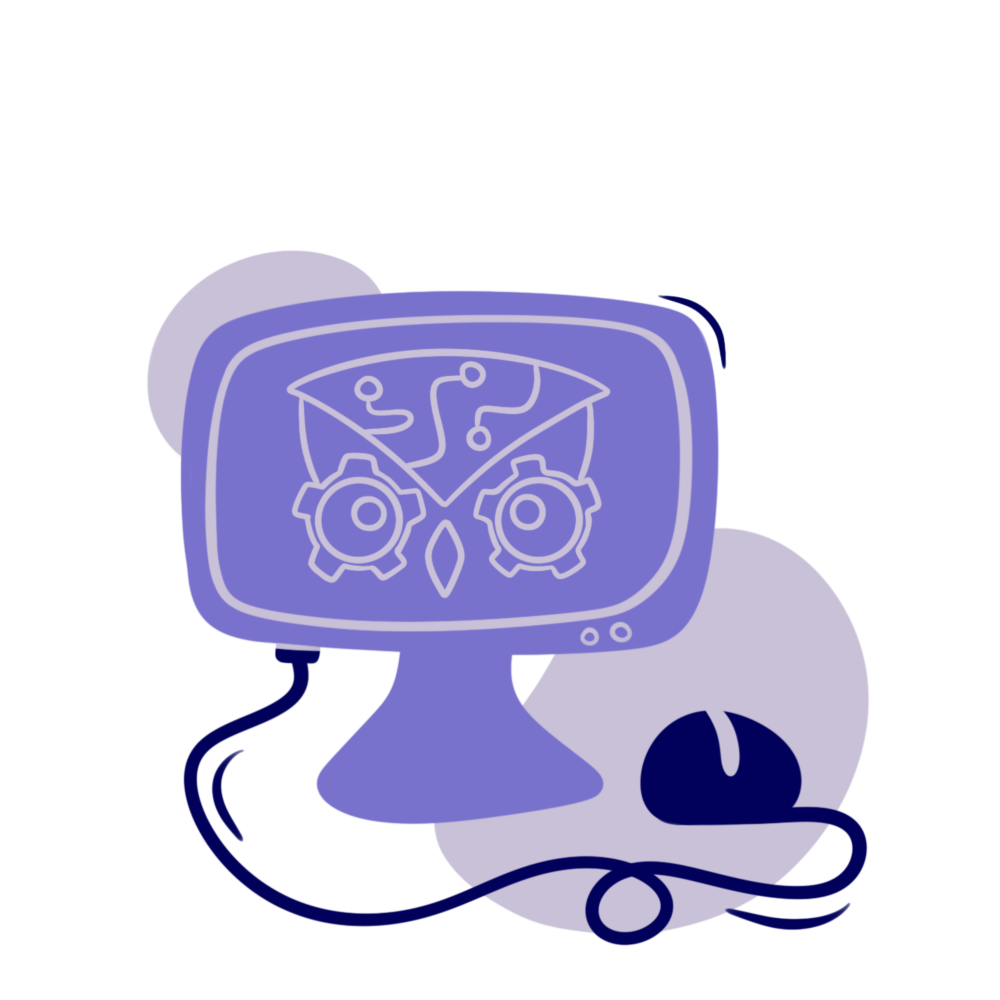
Hi, I’m Owly
With smart questions, I help you further develop your academic texts independently – precise, reflective, and to the point.